The reference for
electronic bills of lading
Legal status, platforms and carrier adoption for eBLs worldwide. Open data, every field sourced and dated.
- Primary sources only
- Every field dated
- Independent and neutral
What is an electronic bill of lading?
A bill of lading is the document issued for goods shipped by sea. It is the receipt for the cargo, proof of the transport contract and, when transferable, the paper that entitles its holder to collect the goods.
An electronic bill of lading does the same job as a digital record. Only one party can control it at a time, and control passes from one party to the next instead of paper changing hands.
Whether it carries the same legal weight as paper depends on the law that applies.
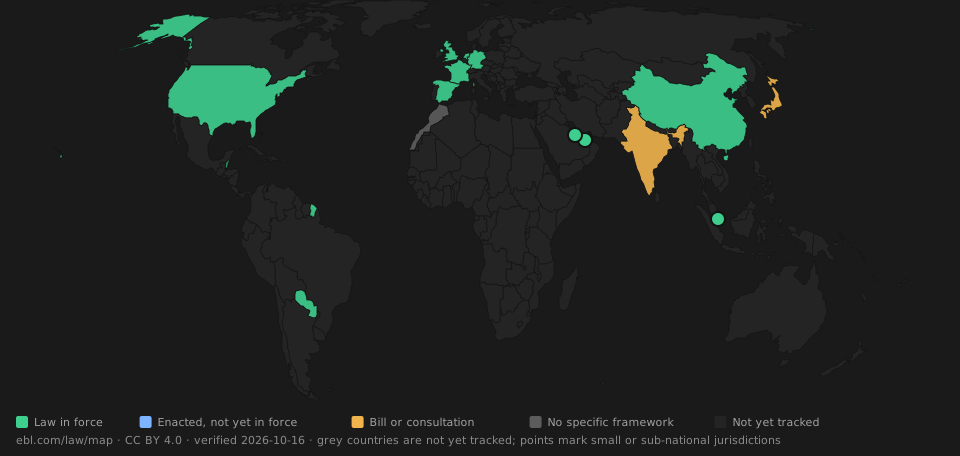
Where eBLs are legally recognised
15 jurisdictions tracked, each sourced to the statute or regulator. Last verified 16 Oct 2026.
Common questions, answered
Plain-English guides to how eBLs work, with every fact linked to a primary source.
- What is an electronic bill of lading (eBL)?An eBL is a bill of lading held and transferred as an electronic record, with exclusive control replacing possession of the paper original.
- How an electronic bill of lading transfer worksHow an eBL moves from carrier to shipper, bank and buyer: exclusive control of one electronic record is transferred on a platform, then surrendered on delivery.
- Is an electronic bill of lading legally valid?An eBL has legal effect where the governing law equates qualifying electronic records with paper, or between parties bound by a platform rulebook.
- Electronic vs paper bill of ladingA paper bill is transferred by handing over a signed original; an eBL by passing exclusive control of a record. Legal effect and P&I cover depend on the law.
- Sea waybill vs bill of ladingA bill of lading is a transferable document of title; a sea waybill is a non-negotiable receipt naming the consignee, who collects on proof of identity.
- Telex release vs electronic bill of ladingA telex release lets a carrier deliver without the paper original once it is surrendered; an eBL is the bill itself held and transferred electronically.
Use the data anywhere
The same verified records behind every page, available as free JSON endpoints. Each record carries its verification date.
Read about the open data →const res = await fetch(
'https://www.ebl.com/api/law'
)
const { data } = await res.json()